

Brewing Good
How Britain's craft breweries are quietly changing the world, one pint at a time

There’s a particular kind of magic in a British taproom on a Saturday afternoon. The light is low, the beer is cold, the conversation is loud, and nobody is thinking about charity. They’re just drinking. But in taprooms up and down this country, something quietly extraordinary is happening alongside the fermentation.
Britain’s craft breweries have become one of the most inventive and underappreciated forces for social good in the United Kingdom. Not through corporate social responsibility reports or PR campaigns but through the beer itself. Through the pint you’re already holding.
This is the story of what they’re doing with it.
The British pub was always political
Before we talk about the present, it’s worth understanding the deep roots. The pub and by extension, the brewery has never just been a place to drink in Britain. It has been a civic institution. A gathering point. A place where communities formed, argued, organised, and looked after one another.
Medieval alehouses were among the earliest communal buildings. The working men’s club tradition of the 19th century was born in the pub. Local breweries sponsored sports teams, funded community halls, and kept money circulating within towns at a time when there was precious little else to rely on.
That tradition never died. It simply reinvented itself.
The modern craft brewery revival, which took hold properly in Britain from the mid-2000s onwards, brought with it a new generation of brewers who understood that a brewery is more than a production facility. It is a community asset. And with that asset comes responsibility.
How British breweries are giving back
The charitable models you’ll find across Britain are as varied as the beer styles being brewed. Some are baked into the business plan from day one. Others evolved as the brewery grew. All of them work.
The 100% model:
Scotland’s Brewgooder donates every penny of profit to clean water projects. Since launching in 2016, it has sold over three million cans of beer, supported more than 140 clean water projects, and unlocked 100 million litres of clean water to communities in Malawi. Through a partnership with Charity: Water, every litre of Brewgooder sold generates 100 litres of clean water in communities across 22 countries with a stated target of one billion pints of clean water delivered. Co-founder Alan Mahon put it simply: “You don’t have to be rich to help out. You can afford a pint. You don’t need to make serious donations to charity to impact people’s lives.”
The per-sale model:
Bristol Beer Factory’s brewed to give programme pledges 2% of every brewery sale to local charities. That figure modest on paper has translated into support for over 150 organisations a year, and the brewery is on track to raise £1 million for good causes in just four years.
The charity beer:
Siren Craft Brew in Berkshire raised over £18,000 for good causes in 2023 alone through limited-edition collaborative releases, including Euphoria, where 50p from every can went directly to LGBTQ+ charities.
Birmingham Brewing Company donates 5% of all Sober Brummie sales to Midlands Air Ambulance.
Cold Town Beer in Edinburgh relaunched its Doddie Beir brew in memory of Doddie Weir, donating 20p from every pint to the My Name’5 Doddie Foundation for Motor Neuron Disease research.
The social enterprise model:
Some breweries don’t add a charitable dimension they build the whole thing around it.
London’s Toast Ale brews with surplus bread replacing a quarter of its malted barley and donates 100% of distributable profits to charities working to fix the broken food system. Since 2016, it has upcycled 2.9 million slices of bread that would otherwise have gone to waste, and won the Queen’s Award for Enterprise in Sustainable Development. Every pint is, quite literally, a vote against food waste.
Profiles in Pints
If you want to understand what purpose-driven brewing looks like at its best, look no further than these operations.
Ignition Brewery South London. A not-for-profit social enterprise that employs and trains people with learning disabilities to brew, serve, and run the taproom. Founded in Sydenham, every member of staff is paid at minimum the London Living Wage. The brewery was eventually transferred, debt-free and cash-rich, to a local charity to continue its work indefinitely. This is what it looks like when a business genuinely means it.
Tap Social Movement Oxford. A craft brewery and social enterprise that provides training and paid employment for people in prison and prison leavers. To date it has created over 100,000 hours of fairly paid work, and an astonishing 94% of the people it works with from prison have not reoffended against a national reoffending average of 50%. It was named Consumer Facing Social Enterprise of the Year 2024. The beer is excellent, by the way. That matters too.
The Hastings Project a not-for-profit brewery whose explicit mission is to maximise profits for donation to local charitable and social care projects across Hastings and the surrounding area. No ambiguity. No small print.
Ilkley Brewery, Yorkshire. Joined the global Hops Not Hate programme, donating half of net profits from designated brews to Ukraine relief charities, with every link in the supply chain — from brewer to bar — encouraged to give alongside them.
Beyond the cheque environmental giving as social impact
For a growing number of British breweries, the act of giving back is inseparable from how they brew in the first place.
Toast Ale’s model is the clearest example: surplus bread replaces a significant portion of the malted barley that would otherwise require land to grow, water to irrigate, and energy to process. The environmental saving is built into the fermentation cycle itself.
Brewgooder takes a similar approach, partnering exclusively with Scottish breweries so that beer travels no more than 50 miles to reach most customers — limiting the carbon footprint of every can sold. 21
Hackney Brewery operates on renewable energy, pays the London Living Wage, repurposes spent grain, and maintains active charity partnerships. None of these things are legally required. All of them are choices — and they signal what kind of business a brewery wants to be.
When breweries work together, the impact multiplies
Individual generosity is meaningful. Collective action is transformative.
Toast Ale assembled a coalition of 25 British and Irish breweries ahead of COP26, who together signed an open letter to world leaders on food waste and jointly created 26 limited-edition Companion Series beers raising £65,000 for Rainforest Trust UK and Soil Heroes.
Manchester’s craft breweries collaborate annually on a Charity Advent Calendar, raising funds for Lifeshare Partnership, the city’s homelessness charity. Small breweries with small margins, pooling their resources because they understand that a local problem demands a local response.
This is not the behaviour of businesses indifferent to their communities. This is the behaviour of institutions that understand they belong to something larger than their balance sheet.
The science of loyalty: why this is also good business
There is a commercial logic to all of this, and there is no shame in acknowledging it.
Consumers, particularly younger consumer, are increasingly choosing brands that reflect their values. A brewery with a clear charitable purpose builds a more loyal customer base. That loyalty generates more revenue. More revenue funds more giving. The loop closes.
Brewgooder’s retail expansion into Asda and Tesco proves the model can achieve national scale without abandoning its mission. Toast Ale attracted £2 million in investment from backers including Heineken and former Unilever CEO Paul Polman not despite its charitable mission but because of it.
The message is simple: choosing a purpose-driven pint is not just a feel-good act. It is a vote for a different kind of economy.
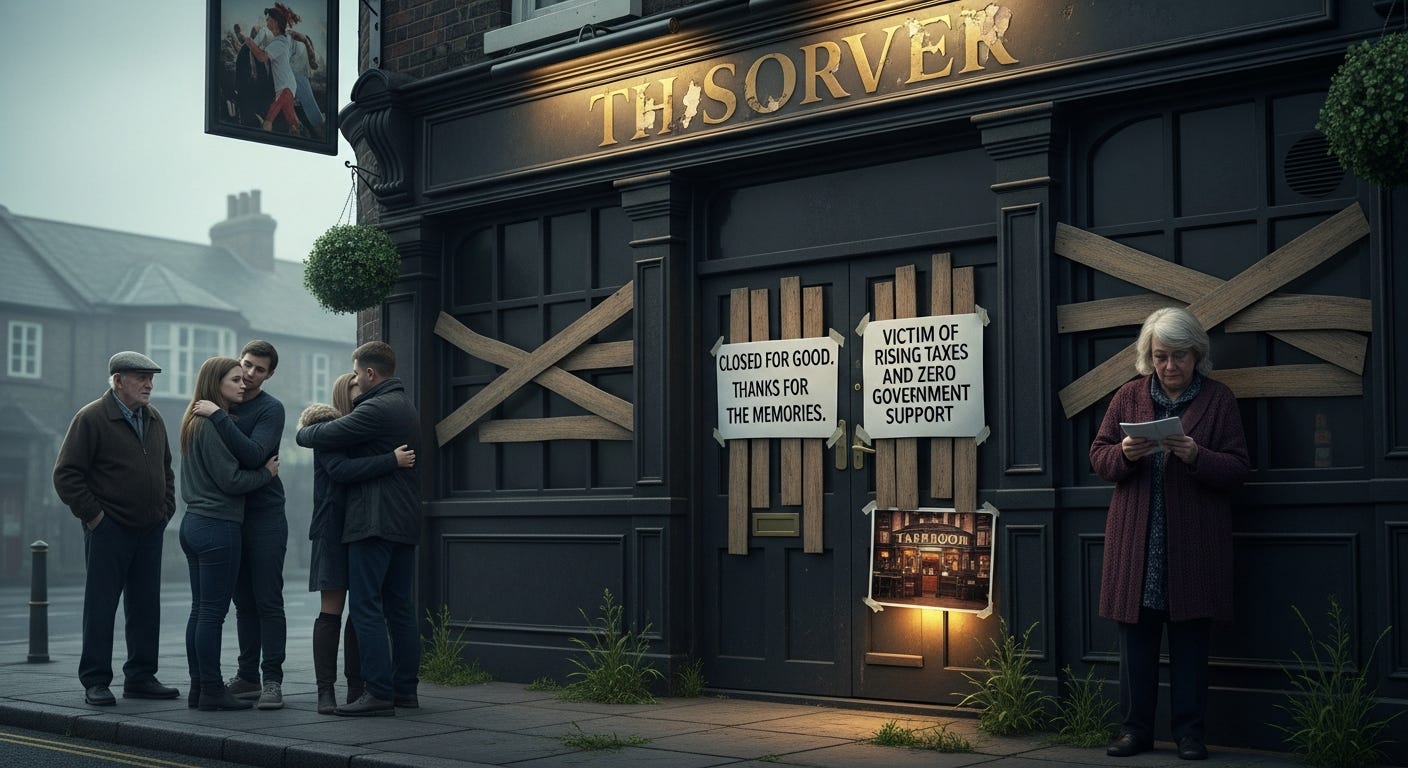
A crisis in the making: Britain is losing its breweries
Here is where this story turns urgent. Because while all of the above is true, something devastating is also happening simultaneously and it demands to be said plainly.
Britain is losing its breweries at a rate that should alarm everyone who cares about community, culture, and the social fabric of this country.
According to the Society of Independent Brewers and Associates (SIBA) UK Brewery Tracker, the UK had 1,828 breweries at the start of 2023. By January 2024, that figure had fallen to 1,815. By January 2025, it was 1,715 a drop of 100 breweries in a single year. By January 2026, the number had fallen further still, to just 1,578. That is a loss of 137 breweries in twelve months, at an average rate of nearly three closures every single week.
SIBA chief executive Andy Slee was unambiguous about what is happening: “Great Britain is extremely fortunate to have such a wide range of independent and passionate breweries producing beer locally across the UK; but if we don’t act soon to reverse closure rates, we could be facing a survival crisis for British brewing.”
The causes are multiple, overlapping, and in many cases preventable.
Legacy Covid debt: Breweries took on government loans to survive the pandemic. Many are now struggling under repayment terms that are neither short enough to manage nor long enough to breathe.
The tax burden: The UK already levies some of the highest alcohol duty rates in Europe. The Labour government increased main rates in February 2025, while the draught duty relief which could have helped pubs serve more local beer remains insufficient. SIBA has called for draught duty relief to be increased to at least 20% to slow the rising price of a pint and encourage people back into community pubs.
Skyrocketing production costs: Malt prices have risen from £480 to £780 per tonne. CO2, essential to carbonation and packaging, has surged. Energy costs, particularly for steam boilers, have ballooned, worsened by the removal of government duty relief on fuel. For Siren Craft Brew’s founder, this amounted to a 40% effective price increase on a single input overnight.
Blocked market access: Smaller independent breweries cannot get their beer into the pubs where their customers drink. The market is dominated by global brands with long-term supply agreements, leaving small producers unable to sell locally even when local demand is strong. As SIBA has pointed out: “The issue is not one of demand — there is huge demand for beer from local independent breweries.”
Rising wages and National Insurance: The increases to the National Minimum Wage and employer National Insurance contributions however justified in isolation have hit small, labour-intensive breweries harder than almost any other sector. Margins that were already tight have become, for many, unworkable.
Business rates: Pubs: the primary channel through which local beer reaches drinkers closed at the rate of one per day through 2025, with a 30% rise in rateable values and the withdrawal of business rates relief making the economics of running a community pub increasingly impossible. When pubs close, breweries lose their customers. When breweries lose their customers, they close too.
The political truth nobody wants to say
Let us be honest about what is really happening here.
The British Government, successive governments, of all colours has consistently treated the brewery and pub sector as a cash cow rather than a community asset. Alcohol duty is raised when budgets are tight. Business rates are reformed in ways that benefit large retail chains and penalise small hospitality businesses. Market access rules are never reformed, because the global brands that benefit from the status quo have bigger lobbying budgets than independent brewers do.
And all the while, the things that breweries quietly do: employing people with learning disabilities, rehabilitating prison leavers, funding clean water in Malawi, raising money for homelessness charities, keeping high streets alive, giving communities a place to gather etc. go largely unacknowledged in the policy conversation.
Every brewery that closes is not just a business failure. It is a community losing its gathering place. It is a charity losing its funder. It is a social enterprise ending its work. It is a local employer shutting its doors. It is the slow, incremental erosion of the connective tissue that holds towns and cities and villages together.
Three breweries a week. That is the current rate.
The demand is there. The desire is there. The talent, the passion, the social mission: all of it is there. What is missing is a Government that understands the difference between taxing an industry and destroying one.
SIBA has made the asks clearly: fix the draught duty relief, reform market access for small breweries, and publish the outcomes of the long-delayed review into pub access for independent producers. These are not radical demands. They are the minimum conditions for survival.
Because here is the uncomfortable truth: without breweries, we do not just lose beer. We lose the Tap Social Movements quietly cutting reoffending rates in half. We lose the Brewgooders turning pints into clean water for communities in Malawi. We lose the Ignition Breweries giving dignified, fairly-paid work to people who the rest of the economy has written off. We lose the Bristol Beer Factories raising a million pounds for local charities. We lose the taprooms that are, for millions of people across Britain, the only genuine community space left on their street.
We lose the town square.
Next time you’re in a taproom, or standing in the supermarket aisle choosing between a branded lager and something made by someone twenty miles away who gives a damn, think about what that choice means. Not just for your palate. For your community. For the people your brewery supports. For the country you want to live in.
And then ask yourself why the Government isn’t thinking about it too.
I'm enjoying your work, Mathias, including this latest post. But can I suggest that you refrain from using AI generated illustrations? It just looks awful - and, ironically considering the subject matter, there are those in the industry who will object on moral grounds. Hope you don't mind me mentioning it. Phil.